The choice between a stapled and a hand-sewn anastomosis is rarely settled by ideology. It is a technical decision shaped by the patient in front of you, the anatomy you can see, the quality of the tissue you can feel, and the team and resources around the table. Both techniques can produce excellent results. Both can fail. The useful question is not which method is “better” in general, but which method gives this patient the safest, most durable reconstruction with the least unnecessary risk.
The Core Trade-Off: Speed, Control, and Tissue Behavior
Stapling brings speed and consistency to suitable anatomy. It can be especially helpful in deep or narrow fields where placing a long suture line is awkward, and in high-volume settings where standardised steps matter. Hand-sewn anastomosis offers direct control: you can adjust bite size, assess tissue as you go, and adapt to uneven or fragile bowel in a way that a device cannot. The trade-off is not simply “fast versus slow.” It is “device-dependent consistency versus hands-on adaptability.”
A stapler does not decide whether the tissue is well perfused, whether the bowel is under tension, or whether the lumen is adequate. Those judgments remain surgical. The safest approach is to treat the stapler as a tool that executes a plan, not as a substitute for one. If the bowel is thickened, oedematous, or poorly prepared, a stapled line can look neat while hiding a poor capture. If a hand-sewn line is rushed, the sutures can look correct while the tissue is under strain.
Operative Time and Workflow
In experienced hands, stapled anastomosis often shortens the reconstruction phase, particularly for long or deep anastomoses and in minimally invasive surgery. But the gain is not automatic. Device selection, checking the stapler, loading, firing, extracting, reinforcing, and managing a misfire all consume time. A stapled case can become slower if the team is unfamiliar with the equipment or if the anatomy demands several attempts at positioning.
Hand-sewn anastomosis is usually more time-sensitive to skill and access. A straightforward end-to-end small bowel anastomosis can be quick and elegant. A deep pelvic or oesophageal anastomosis can be slow and demanding. The practical lesson is to standardise the steps you repeat. Use a consistent suture sequence, confirm orientation before the first stitch, and avoid the common trap of rushing the final few bites. For stapled cases, check the device before the patient is draped, confirm the tissue thickness and staple height, and have a clear backup plan if the fire is unsatisfactory.
Leak Risk and Technical Pitfalls
No technique eliminates leak risk. Anastomotic healing depends on blood supply, tension-free apposition, adequate lumen, clean and healthy tissue, and patient factors such as nutrition, infection, steroid use, diabetes, and prior radiation. Technique matters, but it sits inside that larger picture. Comparing stapled with hand-sewn leak rates across all gastrointestinal sites is misleading because the sites, patients, and surgeon experience differ so much.
With stapling, common pitfalls include poor tissue capture, crossing staple lines, using the wrong staple height for thick or thin tissue, and failing to inspect the doughnuts or staple line in circular anastomoses. With hand-sewn technique, pitfalls include inconsistent bite size, excessive tension on knots, back-wall incorporation, and ischaemia from a tight suture line. In both methods, the anastomosis must be checked for patency, alignment, and perfusion. When the risk profile is high, consider whether a diverting stoma, a different reconstruction, or a more experienced colleague should be part of the plan.
Cost and Resource Use
Stapling usually carries a higher direct device cost per case. Hand-sewn anastomosis uses relatively inexpensive suture material, but it can consume more operating-room time and depends heavily on skilled assistance. The true cost comparison is local. It includes inventory, sterilisation, device failures, wasted reloads, theatre minutes, and the cost of managing complications. A department with reliable stapler supply and trained staff may find stapling efficient. A unit with limited device availability may find hand-sewn technique more predictable.
Cost should not be reduced to the price of the tool on the tray. Look at the whole pathway: preparation, set-up, operative time, turnover, and reoperation risk. Standardising a small number of stapler types can reduce confusion and waste. Standardising hand-sewn technique can reduce variability in training and audit.
Learning Curve and Team Factors
Hand-sewn anastomosis has a long learning curve because it requires knot tying, depth perception, tissue handling, and the ability to adapt under pressure. Stapled anastomosis has a shorter early device-learning curve for the basic steps, but it still requires judgment about patient selection, device preparation, and complication management. A surgeon who can fire a stapler has not automatically learned when not to fire it.
Team familiarity matters as much as individual skill. A well-drilled scrub team can anticipate the next reload, confirm the staple height, and keep the field ready. In hand-sewn cases, consistent assistance with suture handling and exposure makes a visible difference. Signs that a team is ready to expand a technique include:
- Consistent pre-procedure checks and device familiarity.
- A clear sequence for the anastomosis, including a backup plan.
- Routine inspection and documented leak testing where appropriate.
- Audit of outcomes, not just operative times.
- Case selection that matches the trainee’s stage, with senior support available.
Matching Technique to Indication
Stapled anastomoses are common in colorectal surgery, bariatric reconstruction, and several upper gastrointestinal and thoracic procedures where linear or circular devices suit the anatomy. Hand-sewn anastomoses remain valuable in small-calibre bowel, uneven or inflamed tissue, reoperative fields where device placement is risky, and situations where precise suture placement gives better control. Many operations can be done safely either way; the deciding factors are access, tissue quality, tension, and the surgeon’s genuine experience.
Questions worth asking before you choose
Can I get healthy, well-perfused tissue into the device without tension? Is the lumen large enough? Is the field contaminated in a way that changes my risk tolerance? Do I have the right stapler and a reliable backup? Would a hand-sewn line let me adapt better to this tissue? If the anastomosis fails, what is the plan? These questions are more useful than a fixed preference for one method.
A Practical Closing: Build a Decision Habit
Use a short mental checklist before every gastrointestinal anastomosis: patient risk, tissue quality, access, team readiness, equipment, and backup. Choose stapling when the anatomy suits the device and the team can use it consistently. Choose hand-sewn technique when control, adaptability, or small-calibre reconstruction matters more than speed. Then inspect the result with the same scepticism regardless of method: perfusion, tension, patency, and alignment. The best technique is the one you can execute reliably in that patient, with a clear plan for when it does not go as expected. For any individual patient, decisions about anastomotic technique and postoperative care should be made with the treating surgical team.
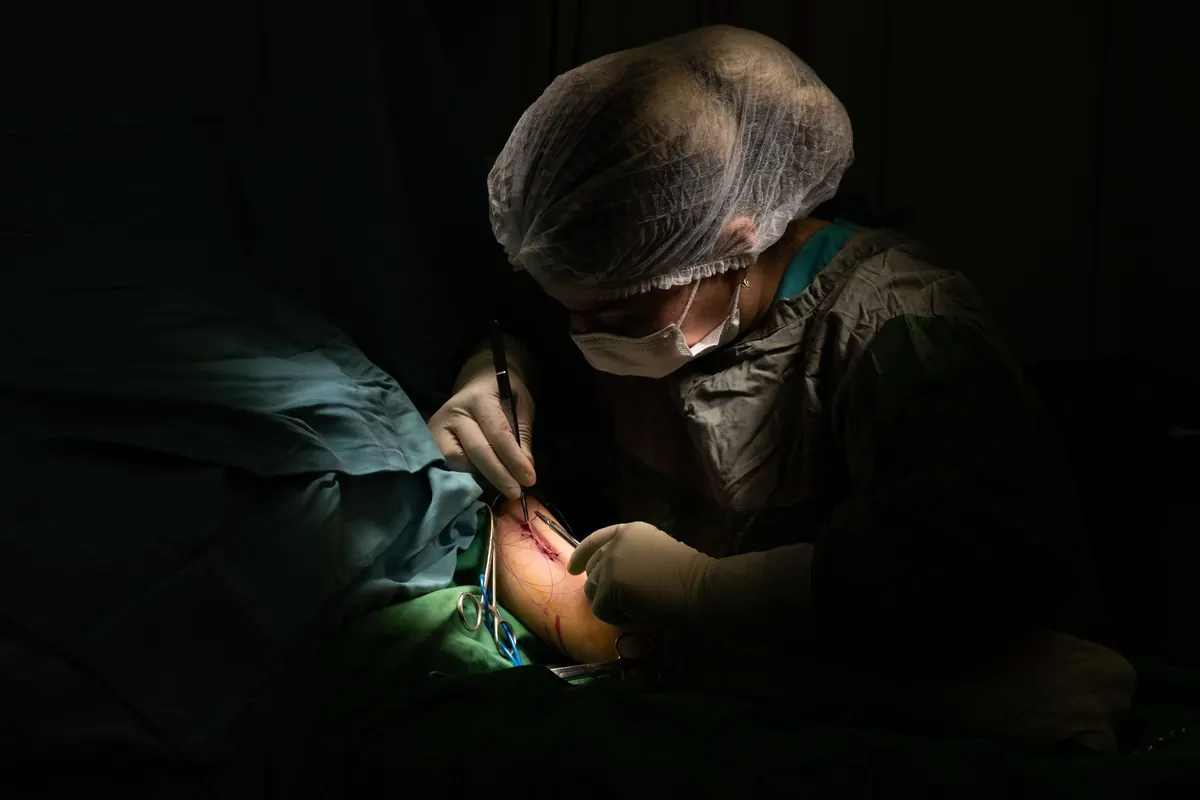
Photo: Javid Hashimov / Pexels